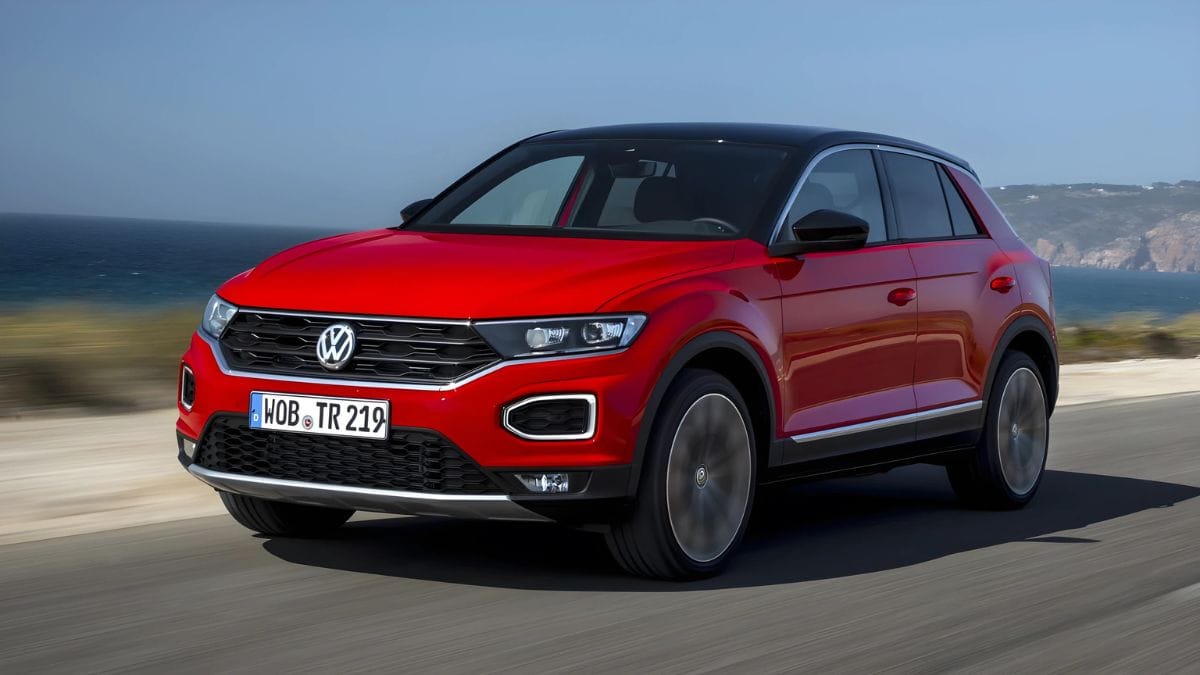
Volkswagen has officially taken the wraps off the second-generation T-Roc, and it’s more than just a mild refresh. This premium compact crossover has been developed entirely from the ground up, and it shows. With a sharper design, more space, and premium tech borrowed from bigger VW models, the new T-Roc is a serious contender in the compact SUV space.
Here are five things that stand out in the all-new T-Roc.
Development
The 2025 T-Roc is not just a facelift—it’s a complete overhaul. Built from scratch, it comes with a fresh, cleaner exterior design and is now 12 cm longer than the outgoing model. That extra length gives it a more planted and muscular road presence while opening up the cabin for better passenger comfort.
It still carries that signature VW styling, but now with a modern twist that aligns with the brand’s newer lineup.
Interior
Inside, the T-Roc feels more premium than ever. The dashboard has been redesigned with softer materials and a lounge-like feel, thanks to ambient background lighting. The new cockpit layout includes a large touchscreen that goes up to 13 inches, giving the cabin a high-tech vibe.
There’s also an optional head-up display built into the windscreen, which is a rare touch in this segment. Overall, it’s clear that Volkswagen has paid attention to making the interior feel more refined and driver-focused.
Space
The added 12 cm in length isn’t just for looks—it pays off in terms of practicality. Rear passengers now get more legroom, and boot capacity has gone up to 475 litres, making weekend trips and grocery runs easier than ever.
In higher trims, you’ll also find premium features like 14-way adjustable front seats with built-in massage functions. It’s clear VW is aiming for comfort and convenience with this generation.
Technology
The T-Roc rides on the MQB evo platform, which allows it to carry over many of the advanced technologies found in higher-end Volkswagen models. You get automatic lane changing, adaptive cruise, and even park assist with a memory function. That means the T-Roc can remember specific parking manoeuvres and execute them with a tap on your smartphone.
Another cool feature is the exit warning system, which alerts passengers if a cyclist or vehicle is approaching as you’re opening the door—perfect for tight city parking.
Powertrains
Unlike its predecessor, the new T-Roc will only be available with mild-hybrid turbo-petrol engines, at least in Europe. The launch lineup includes two 1.5-litre eTSI engines producing 116 bhp and 150 bhp. Both come with a seven-speed dual-clutch automatic gearbox as standard.
Volkswagen also plans to introduce two full-hybrid versions a bit later, catering to buyers looking for even more fuel efficiency. And yes, a sportier T-Roc R variant is in the pipeline, promising stronger performance for those who want some extra thrill.
Here’s a quick overview of key specs:
| Category | Details |
|---|---|
| Length Increase | 12 cm longer than previous generation |
| Boot Space | 475 litres |
| Infotainment Display | Up to 13 inches |
| Engines Available | 1.5 eTSI (116 bhp & 150 bhp) |
| Transmission | 7-speed DSG automatic |
| Platform | MQB evo |
| Notable Features | Lane change assist, park memory, HUD |
The second-gen T-Roc strikes a balance between premium design, smart technology, and practical features, all in a compact SUV body. With hybrid-only powertrains and improved cabin appeal, it’s clearly built for the modern driver looking for a bit of everything.
FAQs
How much longer is the new T-Roc?
It’s 12 cm longer than the previous generation model.
What engine options are available?
Two 1.5 eTSI mild-hybrid engines: 116 bhp and 150 bhp.
Does the new T-Roc support park assist?
Yes, with memory function for smartphone-controlled parking.
What is the boot capacity now?
The boot space is now 475 litres for added practicality.
Will there be a T-Roc R variant?
Yes, a performance-focused T-Roc R is in development.