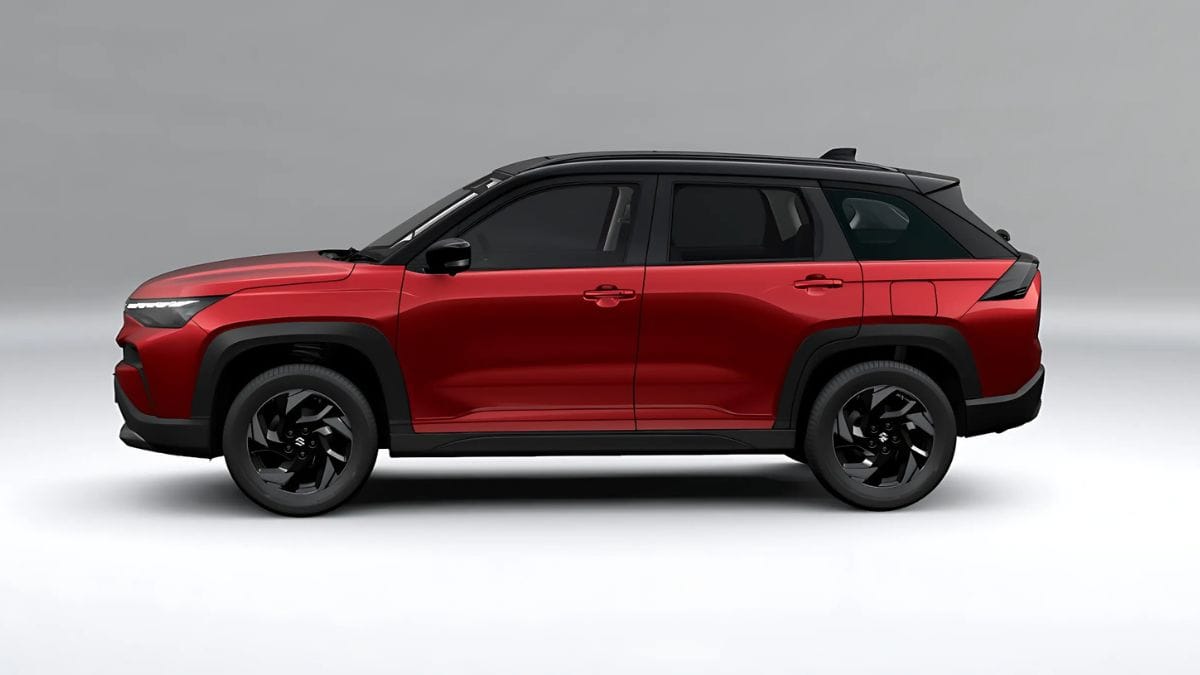
Maruti Suzuki has officially released the ARAI-certified mileage figures for the all-new Victoris SUV, and the numbers are impressive. Despite sharing its powertrains with the Grand Vitara and Toyota Hyryder, the Victoris manages to edge ahead in terms of fuel efficiency — making it the most fuel-efficient SUV in India across multiple categories.
Let’s break down the numbers and see how each variant performs on paper.
Mileage
The Victoris is available in five distinct powertrain configurations: strong hybrid, petrol-manual, petrol-automatic, petrol AWD-automatic, and CNG-manual. Here’s how each of them stacks up:
| Powertrain Type | Transmission | Claimed Mileage |
|---|---|---|
| Strong Hybrid | e-CVT | 28.65 kmpl |
| Petrol Manual | 5-speed Manual | 21.18 kmpl |
| Petrol Automatic | 6-speed Automatic | 21.06 kmpl |
| Petrol AWD Automatic | 6-speed Auto AWD | 19.07 kmpl |
| CNG Manual | 5-speed Manual | 27.02 km/kg |
The star of the show is the strong hybrid variant. At 28.65 kmpl, it becomes the most fuel-efficient SUV in the country, even outperforming the hybrid versions of its platform siblings. The CNG version isn’t far behind, offering a wallet-friendly 27.02 km/kg.
Powertrain
Though the fuel economy has gone up, the engine options remain unchanged. The petrol models use a 1.5-litre mild-hybrid engine producing 102bhp, while the strong hybrid model delivers 116bhp from its combined petrol-electric setup. The CNG version is slightly lower in power at 87bhp.
Despite having a similar kerb weight (ranging between 1,145 and 1,305kg) to its siblings, the Victoris manages to squeeze out better mileage — likely due to small tuning differences and Maruti’s focus on making this SUV the segment benchmark for fuel economy.
Real-World Relevance
For Indian buyers, fuel efficiency still ranks high when choosing a new vehicle. That’s especially true in the compact SUV segment, where daily running costs can make or break a buying decision. With these figures, Maruti is clearly targeting mileage-conscious customers — whether they prefer hybrid tech, traditional petrol, or CNG.
The strong hybrid variant is ideal for city usage, offering the ability to drive short distances purely on electric power. Meanwhile, the petrol manual and automatic versions strike a balance between cost and convenience. The AWD model adds versatility for tough road conditions, albeit with slightly lower efficiency.
Comparison
Compared to the Toyota Hyryder and Maruti Grand Vitara — both of which share the same engines — the Victoris comes out ahead in almost all mileage tests. It’s a marginal difference, but one that could matter to buyers comparing closely matched options.
The Victoris also beats Hyundai Creta and Kia Seltos, neither of which offer a hybrid or CNG option. That puts Maruti in a unique position to dominate this fuel-conscious segment.
With segment-leading mileage figures, a wide variety of engine options, and familiar reliability, the Maruti Victoris is shaping up to be a serious contender in the compact SUV space. It doesn’t just compete — it sets the benchmark for efficiency. Whether you’re a city commuter, long-distance driver, or budget-conscious family buyer, there’s a Victoris powertrain that fits your needs.
FAQs
What is the mileage of Victoris Hybrid?
It delivers 28.65 kmpl with the e-CVT gearbox.
How efficient is the Victoris CNG variant?
It offers 27.02 km/kg with a manual transmission.
Does the Victoris AWD affect mileage?
Yes, AWD version delivers 19.07 kmpl.
Is Victoris more efficient than Hyryder?
Yes, Victoris has slightly better ARAI figures.
What engine powers Victoris petrol models?
A 1.5L mild-hybrid petrol with 102bhp.